How to Heat an Above-Ground Pool: What Actually Works

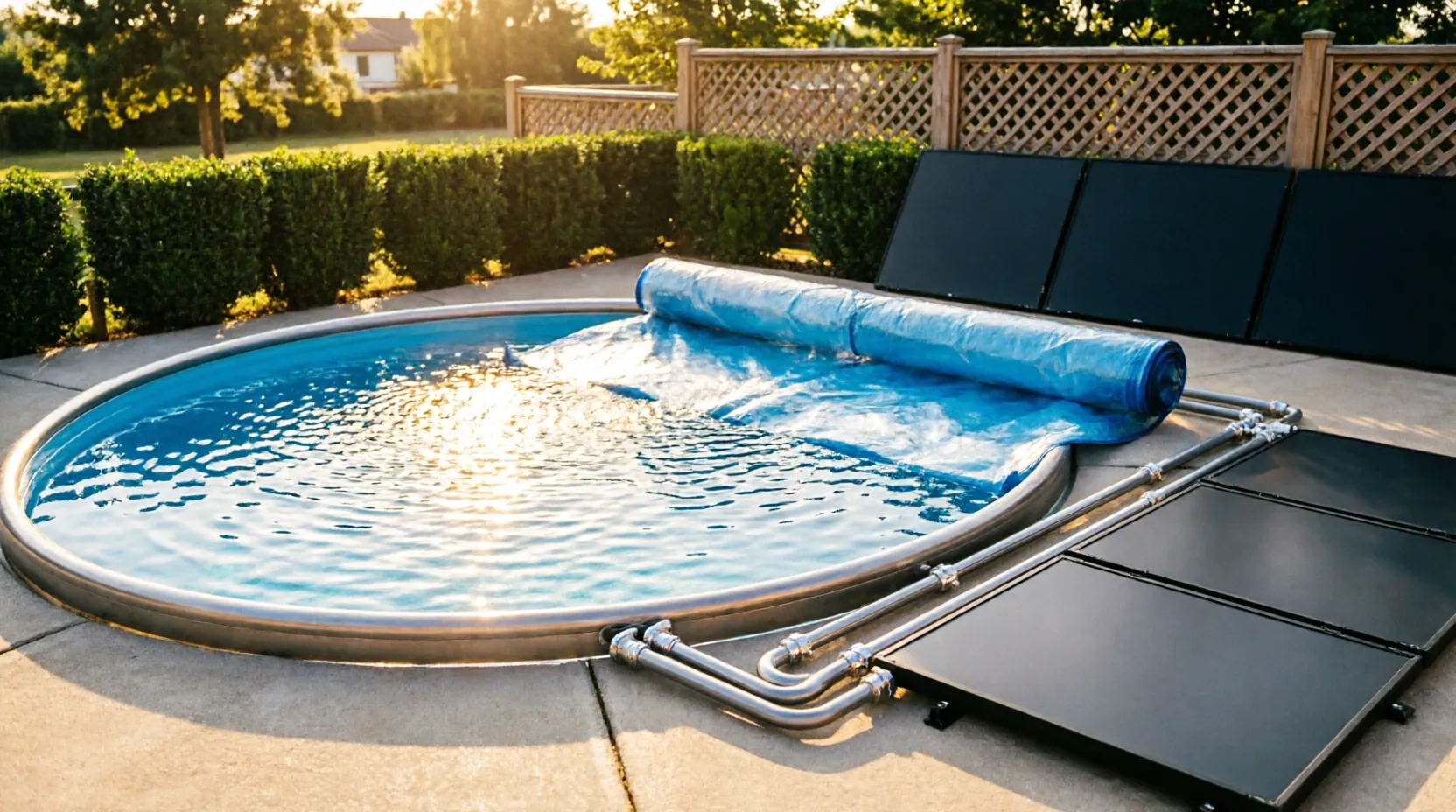
Above-ground pools lose heat differently than inground pools, and almost every piece of advice you’ll find online was written for the inground case and then applied here without adjustment. The same pattern holds at the other end of the season, which is why how to winterize an above-ground pool properly doesn’t just copy the inground checklist.
That’s the root of most disappointment.
An inground pool is surrounded by earth, which is a slow, stable thermal mass that gives heat back at night. An above-ground pool is a bag of water suspended in air, with wind moving across the surface and around all four sides of the wall.
It gains heat faster in the sun. It dumps it faster after dark. Both of those facts should change what you buy.
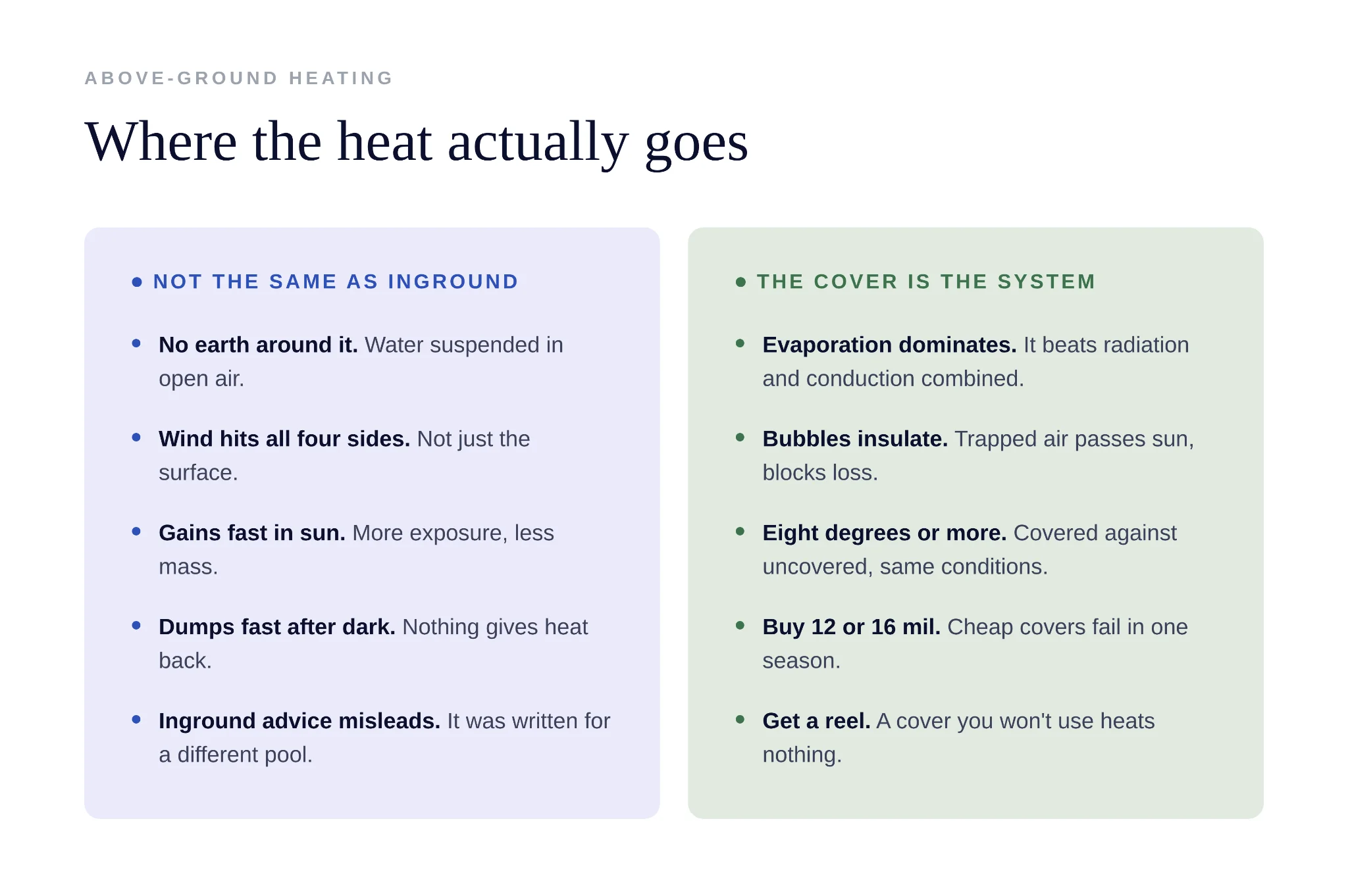
The other thing worth saying up front: most of the heat leaving your pool leaves through the surface. Not the walls. Not the floor. The surface, through evaporation, mostly, which carries away far more energy than radiation or conduction combined. A pool at 82 degrees on a 65-degree night with a breeze is running an open-air evaporative cooler at full tilt, and no heater on the market wins that fight economically if the surface is uncovered.
Which means the first thing to do about heating isn’t heating at all.
The Cover Is the Whole Game
A solar cover isn’t an accessory to a heating system — it’s part of the system, which holds just as true for heating an inground pool with any heat source. It is the heating system. Everything else you add is supplementary.
It does two jobs at once: stops evaporation, which is the dominant heat loss pathway, and traps a layer of air that passes solar gain into the water while blocking convective loss. On a sunny stretch, an uncovered above-ground pool might sit at 70 while an identical covered one runs 78 to 82.
That’s the difference between a pool nobody uses and a comfortable pool.
What to buy:
- 12-mil or 16-mil, not 8-mil. Cheap covers tear at the seams and lose bubbles to UV within a season. The thicker ones last three or four times as long, which makes them cheaper by the second summer.
- Clear or light blue. Darker covers absorb more heat at the surface but pass less through to the water.
- A reel. Not optional.
That last one matters more than the cover spec. Wrestling a wet cover off a 24-foot round pool alone, dripping across the deck, then finding somewhere to put it — that’s why most covers spend the season folded behind the shed. A reel is the difference between a cover you use and a cover you own.
Liquid solar covers form a molecular-thin alcohol layer that slows evaporation. Honest assessment: they help, maybe a third to half as well as a real cover, and wind disrupts the layer badly. Better than nothing. Not a substitute.
Solar Heating: Cheap to Run, Slow to Deliver
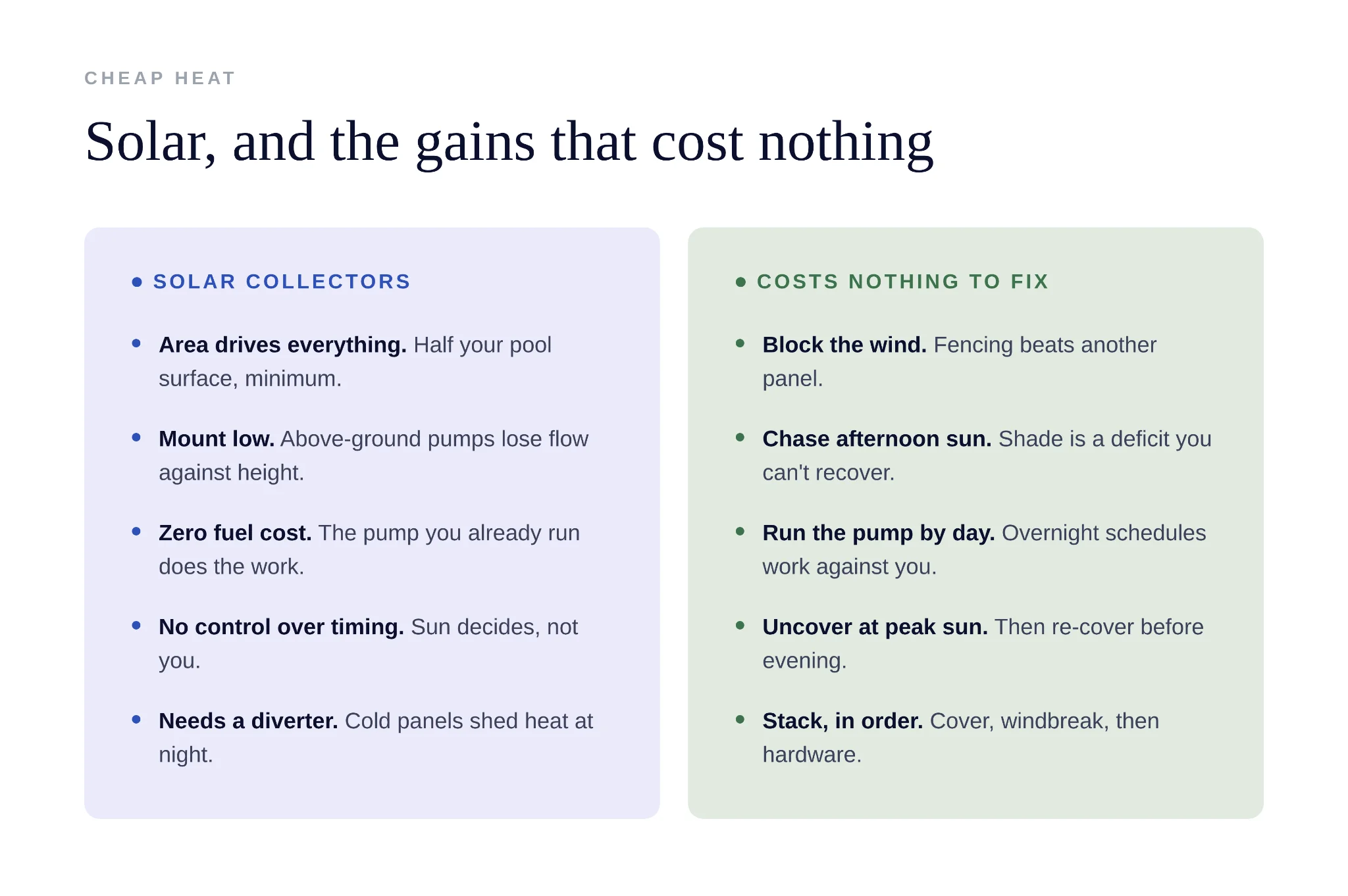
Black panel arrays or coiled mats plumbed into your return line are the lowest operating-cost heating you can install. Zero fuel. The pump you’re already running does the work.
Performance comes down to one number: collector area relative to pool surface area.
- 50 percent minimum for meaningful gain
- 80 to 100 percent in cooler climates or to extend the season on both ends
People buy one panel for a 21-foot pool, see two degrees, and conclude solar doesn’t work. Solar worked exactly as much as they paid for.
Mounting is where above-ground installs differ. Ground mounting is usually better here, because above-ground pumps are low-head units that lose flow badly against elevation. Panels on a two-story roof with a standard above-ground pump is how you end up with weak circulation and nothing to show for it.
Solar’s limitation is control. You get heat when the sun decides, in the amount it decides. A run of overcast days and the pool drifts back toward ambient. Solar raises your seasonal average. It won’t warm the water by Saturday because you’re having people over.
One thing nobody mentions: solar panels run in reverse at night. Water circulating through cold collectors after dark actively sheds heat.
Any decent system includes a diverter valve and a controller that shunts flow away when panel temperature drops below water temperature. Without one, you’re managing it manually, and one forgotten night undoes several sunny days.
Heat Pumps: The Right Answer for Most People
If you want a pool at a chosen temperature, reliably, without a fuel bill that hurts, a heat pump is the answer for above-ground pools in most climates. To compare the upfront price against running costs for your own climate, see this heat pump versus gas pool heater payback comparison.
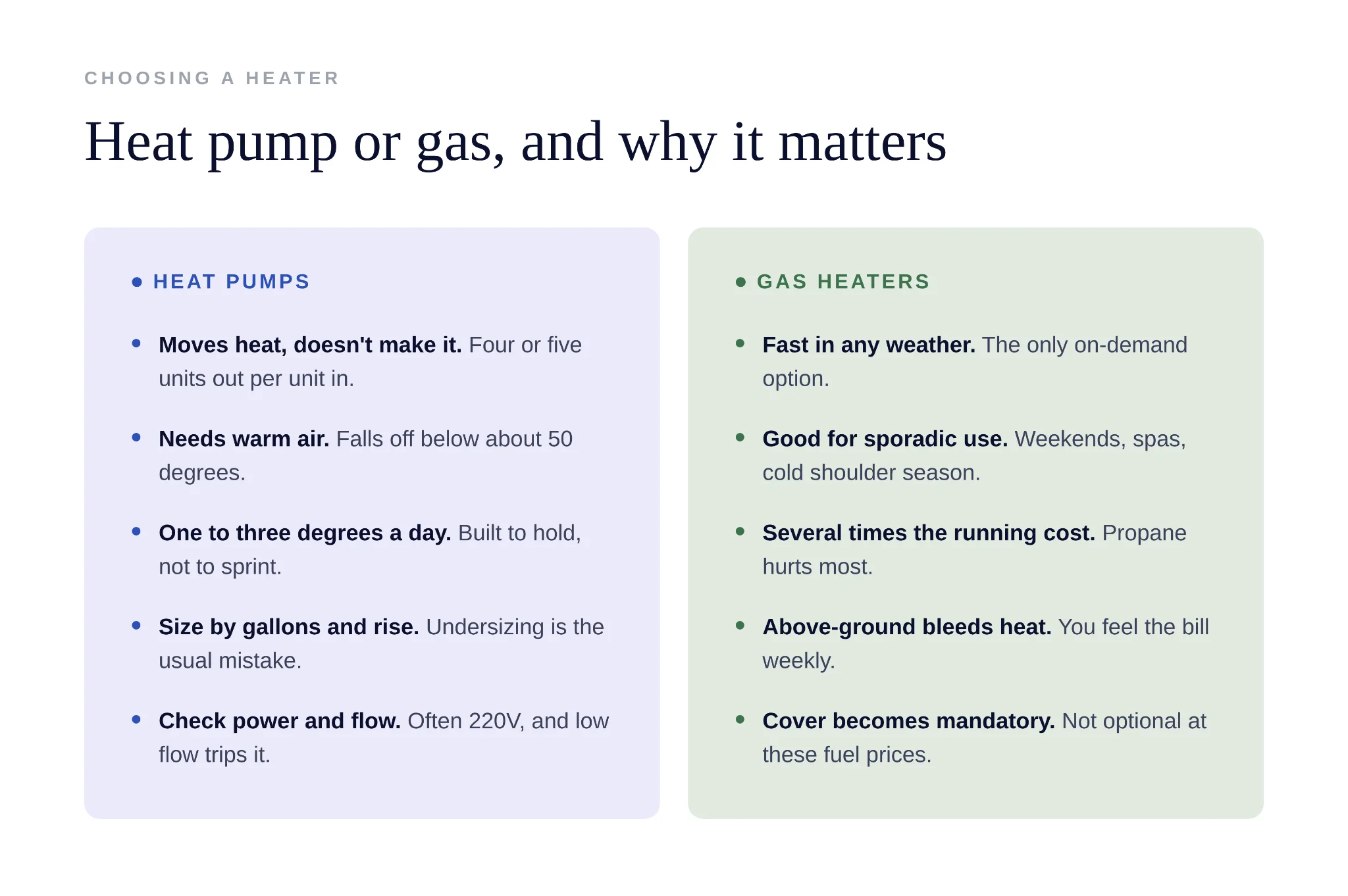
They pull warmth out of the air and transfer it into the water, like an air conditioner in reverse. A gas heater burns fuel at 80 to 84 percent efficiency. A heat pump returns four or five units of heat per unit of electricity, because it isn’t making any.
Two catches:
- Cold air. Below 50 degrees, output falls off. Above 60, it’s in its element. Fine for late spring through early fall.
- Speed. One to three degrees a day. Set 84 and leave it — the “turn it on Friday for Saturday” plan doesn’t work.
Size it off gallons and the rise you want above ambient. A 15,000-gallon pool holding ten degrees above ambient lands around 50,000 to 75,000 BTU. Undersize it and the unit runs constantly, never gets there, and you decide heat pumps don’t work.
Two things people miss until install day:
- Electrical. Most need a dedicated 220V circuit. If your equipment runs off a 110V outlet, add an electrician to the budget.
- Flow rate. Above-ground pumps often move less water than the heater expects, and low flow trips the pressure switch. Check minimum flow against your pump’s real output, not its rated maximum.
Gas Heaters: Fast, Expensive, Situational
Gas and propane do one thing better than anything else: heat fast, in any weather, on demand. If you want the pool at 88 by tonight and it’s 55 outside, nothing else does that.
Worth it for sporadic weekend use, an attached spa, or cold shoulder seasons where a heat pump has nothing to work with.
For steady seasonal use, usually the wrong call. Running costs are several times a heat pump’s, and above-ground pools bleed heat fast enough that you feel the fuel bill weekly. Propane gets brutal. People install these, use them twice, get the bill, and never touch the thermostat again. If you are still weighing fuel types, see how to choose between gas and electric pool heaters.
Go this route and the cover stops being optional.
The Free Improvements Nobody Makes
Wind is the second-biggest variable after cover use, and it’s almost entirely fixable.
Moving air across water accelerates evaporation dramatically. A pool taking prevailing wind in an open yard is losing heat continuously in a way a sheltered one isn’t. Fencing, hedging, or lattice on the windward side — even partial — produces a difference you can feel. A windbreak beats another $600 of solar panels.
Three more that cost nothing:
- Site it for afternoon sun. A pool shaded from mid-afternoon starts every day at a deficit no equipment fully recovers. This is the one decision that’s hard to undo.
- Run the pump by day, not overnight. Daytime circulation pulls warm surface water down through the volume instead of letting the top few inches heat up and radiate it away after dark. Off-peak schedules are backwards for heat retention.
- Uncover at peak sun in cool weather. Direct gain on open water beats the cover’s transmission. Re-cover before evening.
Stacking Works
Every one of those habits leaves the surface open more often, which means more debris on it.
Uncovering for peak sun in spring puts the water under whatever’s still falling from the trees, and a layer of leaves and pollen on the surface isn’t cosmetic. It blocks some of the gain you uncovered to get.
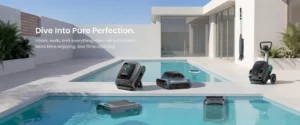
A solar skimmer handles that without adding to the problem. Solar-powered options like the ones in Aiper’s robotic pool cleaner lineup float and run off their own panel, moving toward sunlight when the battery drops and covering the surface for hours on a charge. Nothing plugged in, no pump time added, which matters in a section about gains that cost nothing to operate.
Get more pool and lawn care guides from Aiper on Google