
Under suitable water supply and environmental conditions, IrriSense can achieve a maximum one-way watering distance of approximately 12m(39 ft). Actual reach depends on your faucet’s water pressure, flow rate, hose setup, nozzle type, and wind conditions.
IrriSense can reach up to approximately 12m(39 ft) under suitable water supply conditions. The maximum distance is determined primarily by water pressure and flow rate from your outdoor faucet. A shorter-than-expected reach does not necessarily indicate a product issue — most cases can be resolved by optimizing the hose setup, selecting the right nozzle, or adjusting the distance setting in the Aiper App.
What Determines IrriSense Watering Distance?
IrriSense watering distance is primarily determined by the water supply reaching the device:
- Water pressure affects the force of the water stream.
- Flow rate affects the volume of water available to the device.
High pressure with insufficient flow, or sufficient flow with low pressure, may both limit the maximum watering distance. To better accommodate regional water supply conditions, Aiper offers two nozzle options:
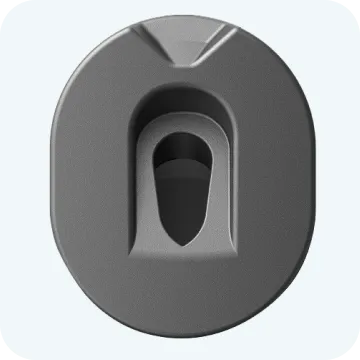
- Standard Nozzle — balanced spray pattern for typical household water pressure
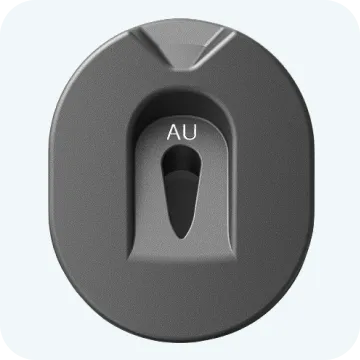
- Jet Nozzle — concentrated stream for greater reach, included with select North American models
Available nozzles may vary by product model and sales region. For the IrriSense model, only the Jet Nozzle is provided in Europe and Australia. Please refer to the accessories included with your product.
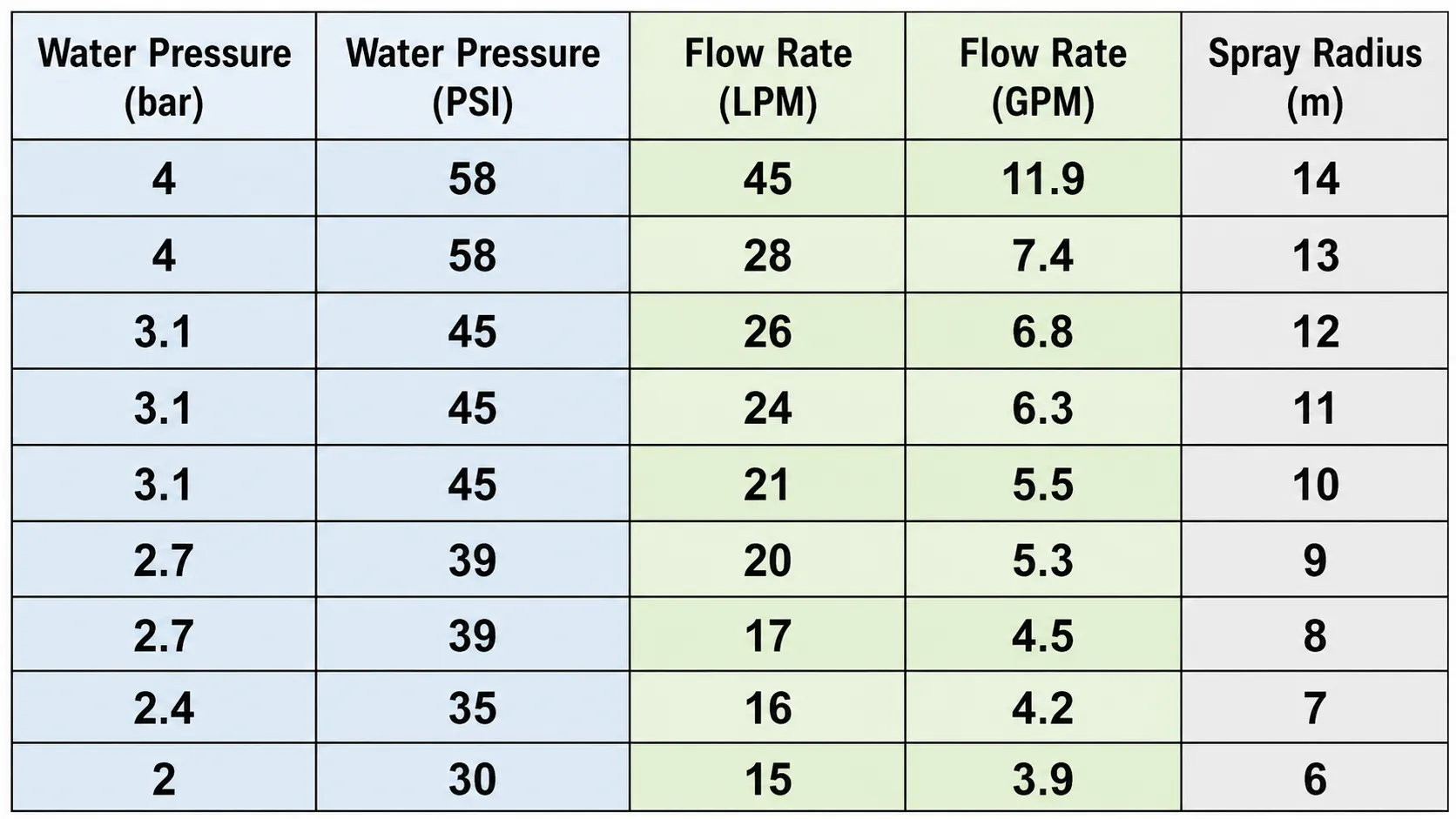
Standard Nozzle Performance
The tables below show the expected watering distance for the Standard Nozzle under different water pressure and flow rate combinations. Use these as a reference when measuring your own water supply.
Jet Nozzle Performance
The Jet Nozzle is designed to provide greater reach with a more concentrated stream. Compare these reference values with your measurements to determine whether the Jet Nozzle would improve your setup.
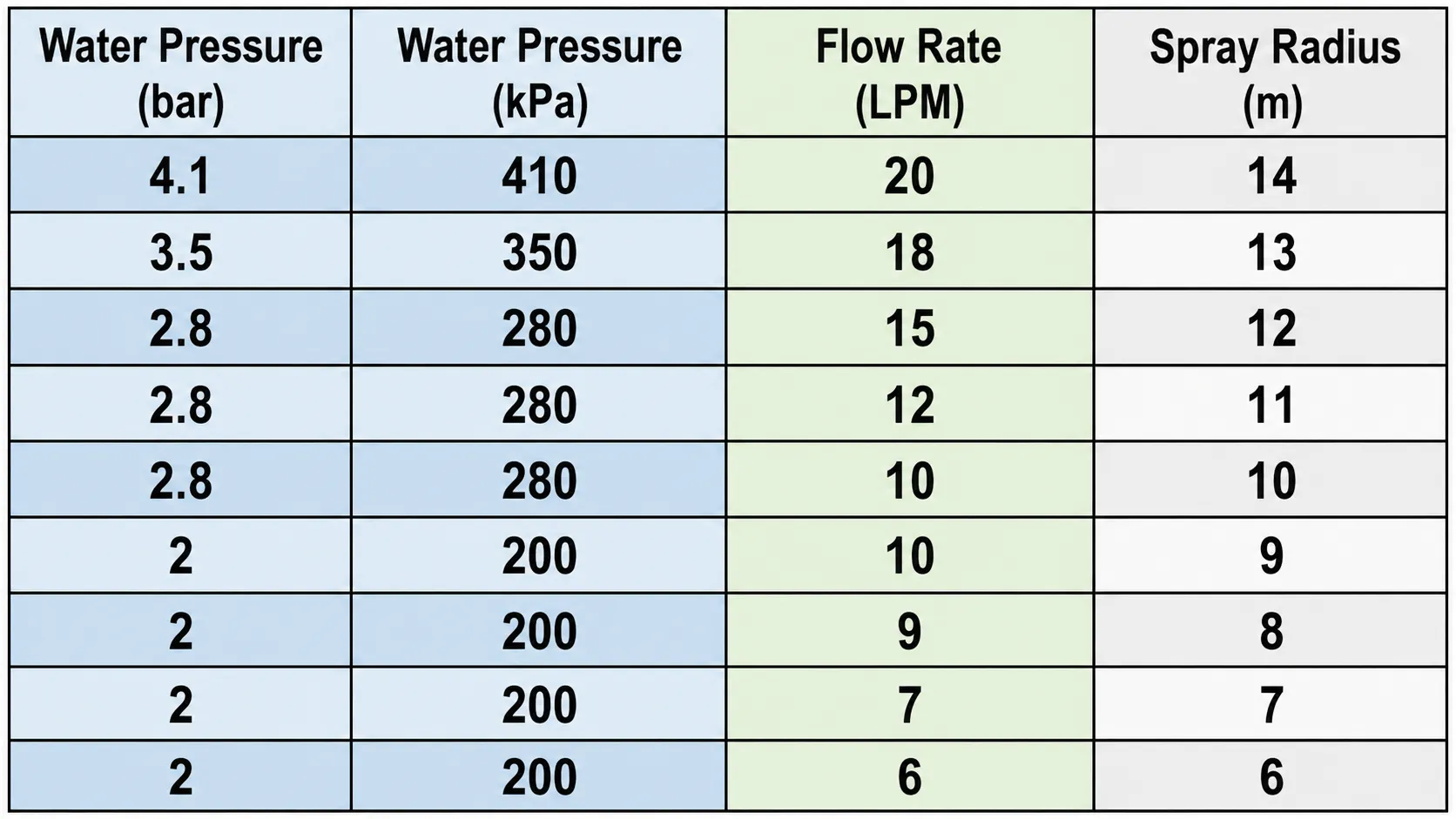
* All data was measured by Aiper in a wind-free laboratory environment and is provided for reference only.
How to Measure Your Water Pressure and Flow Rate
For the most accurate results, measure the water supply using the same faucet, hose, and connectors that will be used with IrriSense.
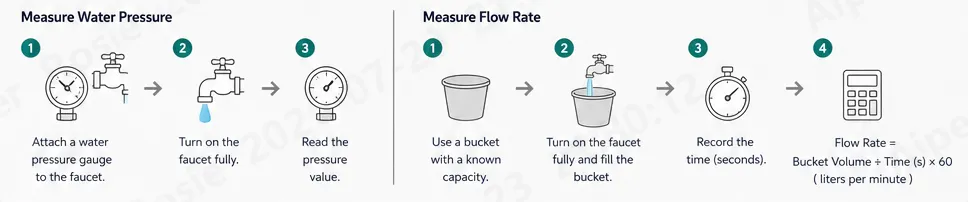
Measuring Water Pressure
You will need a water pressure gauge designed for an outdoor faucet:
- Purchase a water pressure gauge from a local hardware or home improvement store.
- Turn off other devices or fixtures using the same water supply.
- Attach the pressure gauge to the outdoor faucet intended for IrriSense.
- Fully open the faucet.
- Read the pressure shown on the gauge.
When possible, you can also measure the pressure at the end of the garden hose. This can help identify pressure loss caused by the hose or connectors.
Measuring Flow Rate
You will need a bucket with a known capacity and a timer:
- Use the same faucet, hose, and connectors intended for IrriSense.
- Fully open the faucet.
- Measure how many seconds it takes to fill the bucket.
- Calculate the flow rate using the formula below.
For example, if a 10-liter bucket takes 30 seconds to fill: 10 ÷ 30 × 60 = 20 liters per minute.
Compare your measured water pressure and flow rate with the nozzle performance tables above to estimate the watering distance available from your setup.
How to Improve Watering Distance
If your IrriSense watering distance is noticeably below the reference range, or below approximately 8 m (26 ft), follow the checks below. In most cases, reach can be improved by optimizing the water supply path or adjusting the device settings.
1. Check the Garden Hose and Connections
Resistance within the water supply path can reduce both water pressure and flow rate. Make sure that:
- The hose is not flattened, twisted, pinched, or kinked.
- The hose is no longer than 15 m (approximately 50 ft) whenever possible.
- An expandable hose is not being used.
- A 5/8-inch or 3/4-inch garden hose is used for better water delivery.
- Splitters and unnecessary adapters are removed during testing.
- No other devices are using the same water source.
- Connectors, filters, and valves are correctly installed and free from blockages.
Using a Backflow Preventer: Some European versions of IrriSense 2 include a backflow preventer. Installing this component may reduce the watering distance by approximately 1–2 m (3–6 ft). Use or remove the backflow preventer only in accordance with local plumbing regulations and installation requirements. Do not remove it where backflow protection is legally required.
2. Check the Nozzle
Different nozzles are designed for different water supply conditions and watering requirements. Some North American models include a Jet Nozzle. If the Standard Nozzle does not provide sufficient reach, installing the Jet Nozzle may help increase the maximum watering distance.
Before replacing the nozzle:
- Turn off the water supply.
- Check the nozzle for dirt, sediment, or blockages.
- Install the nozzle according to the product instructions.
- Turn the water supply back on and test the maximum distance in the Aiper App.
The Jet Nozzle is designed to provide greater reach. Its watering pattern and water distribution may differ from those of the Standard Nozzle.
3. Check the Main Household Water Pressure
If the hose and nozzle are in good condition but the measured water pressure remains low, your household pressure regulator may be limiting the supply. The pressure regulator is usually located near where the main water line enters the home, often close to the water meter or main shutoff valve.
You may:
- Use a pressure gauge to confirm the current pressure.
- Check whether the pressure regulator is functioning correctly.
- Make small adjustments only if permitted by local regulations and your household plumbing system.
- Measure the pressure again after each adjustment.
Do not increase the pressure beyond the safe operating limits of your household plumbing or connected appliances. If you are unfamiliar with household water systems, contact a licensed plumber to inspect or adjust the regulator.
4. Adjust the Maximum Distance in the Aiper App
During mapping, IrriSense produces a visible water stream to help you confirm the watering direction. This initial stream does not necessarily represent the device’s maximum reach.
To test the maximum distance:
- Open the Aiper App and enter the IrriSense mapping interface.
- Select the direction or boundary point you want to adjust.
- Continue tapping the distance increase button.
- Stop when the App displays “Maximum Distance Reached.”
- Check the final landing position of the water.
Set the watering boundary according to your actual garden layout. Avoid extending the range beyond the intended area or spraying onto roads, walls, buildings, or neighboring property.
5. Test in Low-Wind Conditions
Wind can shorten the effective watering distance and change where the water lands. For more accurate testing and mapping, use IrriSense during:
- Early morning
- Midday when wind conditions are calm
- Stable weather without strong gusts
Completing the initial mapping in low-wind conditions helps improve boundary accuracy. During daily watering, the actual landing position may still vary slightly with changing wind conditions.
Still Not Reaching the Expected Distance?
If the maximum watering distance remains below 8 m (26 ft) after completing all the checks above, contact Aiper Customer Support and provide the following information:
- IrriSense model
- Country or region
- Installed nozzle type
- Measured water pressure
- Measured flow rate
- Hose length and diameter
- Any splitters, backflow preventers, valves, or adapters in use
- A video showing the water stream when the App displays “Maximum Distance Reached”
This information will help the support team determine whether the reduced reach is related to the water supply, installation setup, nozzle configuration, or the device itself.
In most cases, shortening the hose, reducing connection resistance, selecting the appropriate nozzle, or increasing the distance setting in the Aiper App can significantly improve IrriSense watering performance.
How This Guide Works
This troubleshooting guide is based on Aiper laboratory measurements in wind-free conditions and real-world customer data. The nozzle performance tables provide reference values so you can compare your home water supply measurements and set realistic expectations. Start by measuring your water pressure and flow rate, then work through each section in order — most users improve their reach significantly after the first few checks.
Frequently Asked Questions
What is the maximum watering distance of IrriSense 2?
About 12 m (39 ft) one way is the ceiling, measured by Aiper in wind-free laboratory conditions, so treat it as a best case rather than a typical result. A reach somewhere between 8 m (26 ft) and 12 m is normal for a home setup. If yours stays below 8 m, the water path is usually the cause — see the next question.
Why is my IrriSense only reaching 8 m (26 ft) or less?
A reach below 8 m typically indicates resistance in the water supply path. The most common causes are: a hose longer than 15 m, an expandable hose, a kinked or flattened hose, a clogged nozzle, low household water pressure, or a backflow preventer reducing flow. Run through the five checks in this guide (hose, nozzle, household pressure, app settings, and wind conditions) before contacting support.
Which nozzle should I use — Standard or Jet?
If your model includes both nozzles, start with the Standard Nozzle and compare your result with the Standard Nozzle table. Switch to the Jet Nozzle only if the measured reach stays short of the table values, because it concentrates the stream for distance rather than balanced coverage. Which nozzles you have depends on your model and region, so check the accessories in the box.
How do I measure my water pressure and flow rate?
Use a water pressure gauge on your outdoor faucet to measure pressure. For flow rate, time how long it takes to fill a bucket of known capacity, then use the formula: Flow Rate = Bucket Volume ÷ Filling Time in Seconds × 60. This gives you liters per minute, which you can compare against the nozzle performance tables in this guide.
Does wind affect IrriSense watering distance?
Yes, wind can significantly shorten the effective watering distance and change where the water lands. For the most accurate range testing and initial mapping, operate IrriSense in low-wind conditions such as early morning or calm midday periods. During daily watering, some variation is normal.


