How to Fix Dead Spots in a Lawn: Diagnose Before You Reseed

Most dead spots get reseeded twice — and getting the seed to actually come up is its own problem, which is why pre-germinating grass seed before you spread it is worth the extra day. The first time, the homeowner rakes out the brown patch, throws seed down, waters it for a week, and watches new grass come up.
Six weeks later, the spot is brown again. Sometimes bigger.
That’s the whole reason this article leads with diagnosis. Seed fixes exactly one thing: missing grass. It does nothing about the grub colony feeding two inches under the surface and the dog that visits the same corner every morning.
If the cause is still active, reseeding is just restocking the buffet. Nitrogen overload is one cause that keeps acting until it’s fixed — our guide to rescuing an over-fertilized lawn from nitrogen burn damage walks through the flush-and-repair sequence.
So before you buy anything, spend twenty minutes figuring out what actually killed the grass.
Make Sure the Grass is Actually Dead
Grab a handful of the brown grass and pull.
If it resists, if the blades are brown but the plant holds firm in the soil, it’s probably dormant, not dead.
Cool-season grasses check out in extended summer heat and drought. Warm-season grasses like bermuda and zoysia go straw-brown every winter, and it means nothing. Dormant grass doesn’t need seed. It needs water, or a change of season, and it’ll green back up on its own. That same diagnose-before-you-seed rule applies even more when the bare patch is large — our guide to fixing large bare spots in a lawn covers the bigger-scale version of this fix.
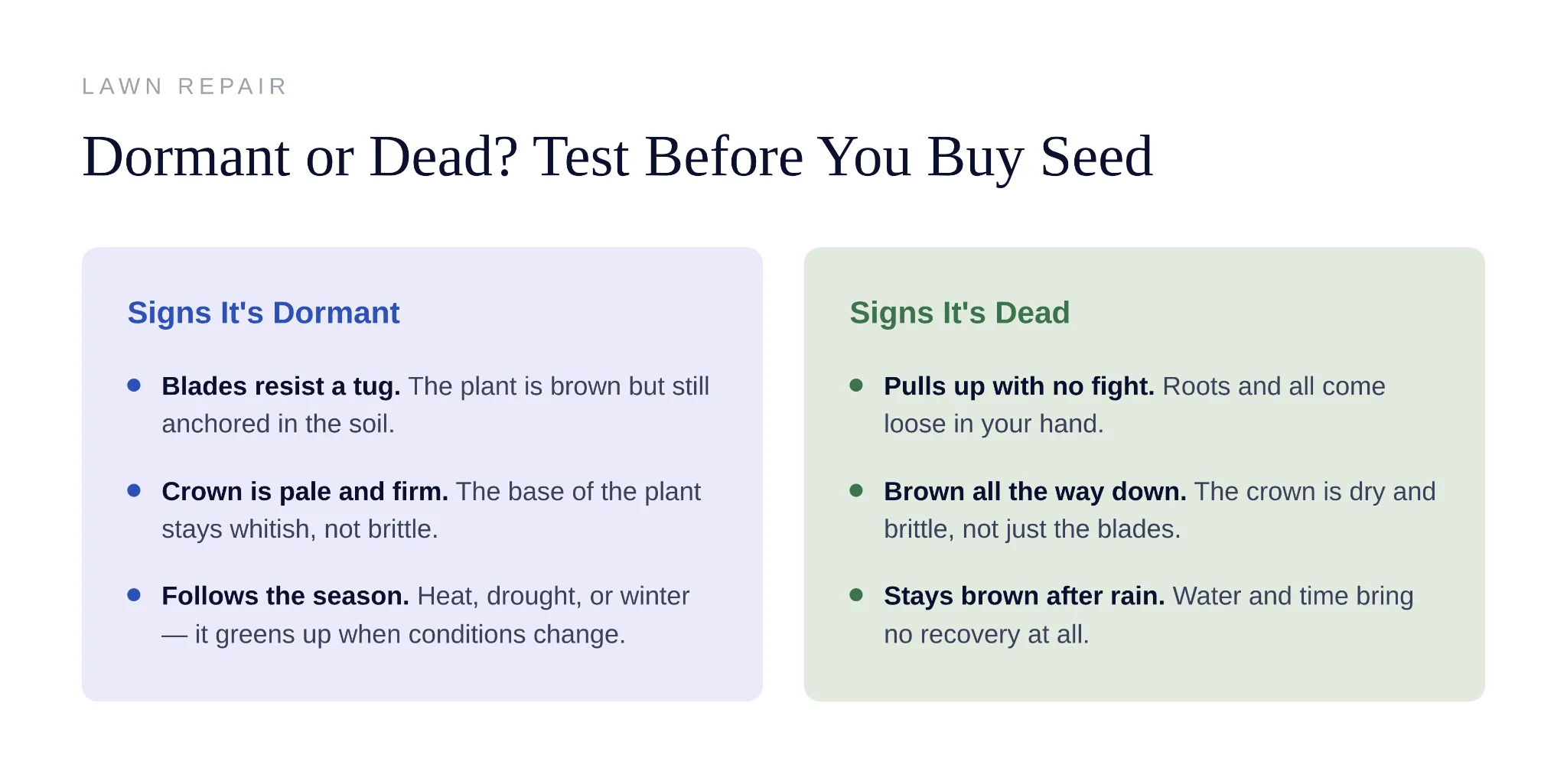
If the grass comes up in your hand with no fight, roots and all, that section is dead. Now it matters why.
One more check that catches people out: pull back the brown blades and look at the crown, the whitish base where the blade meets the roots. A dormant plant has a crown that’s still pale and slightly firm. A dead one is brown all the way down and brittle.
Read the Pattern Before You Touch Anything
The shape and behavior of a dead spot narrows the suspect list fast.
Small round spots with a dark green ring around the outside are dog urine, almost every time. The center gets a nitrogen overdose and burns; the diluted edge gets a fertilizer dose and grows greener than everything around it. That green halo is the tell. You won’t confuse it with anything else once you’ve seen it.
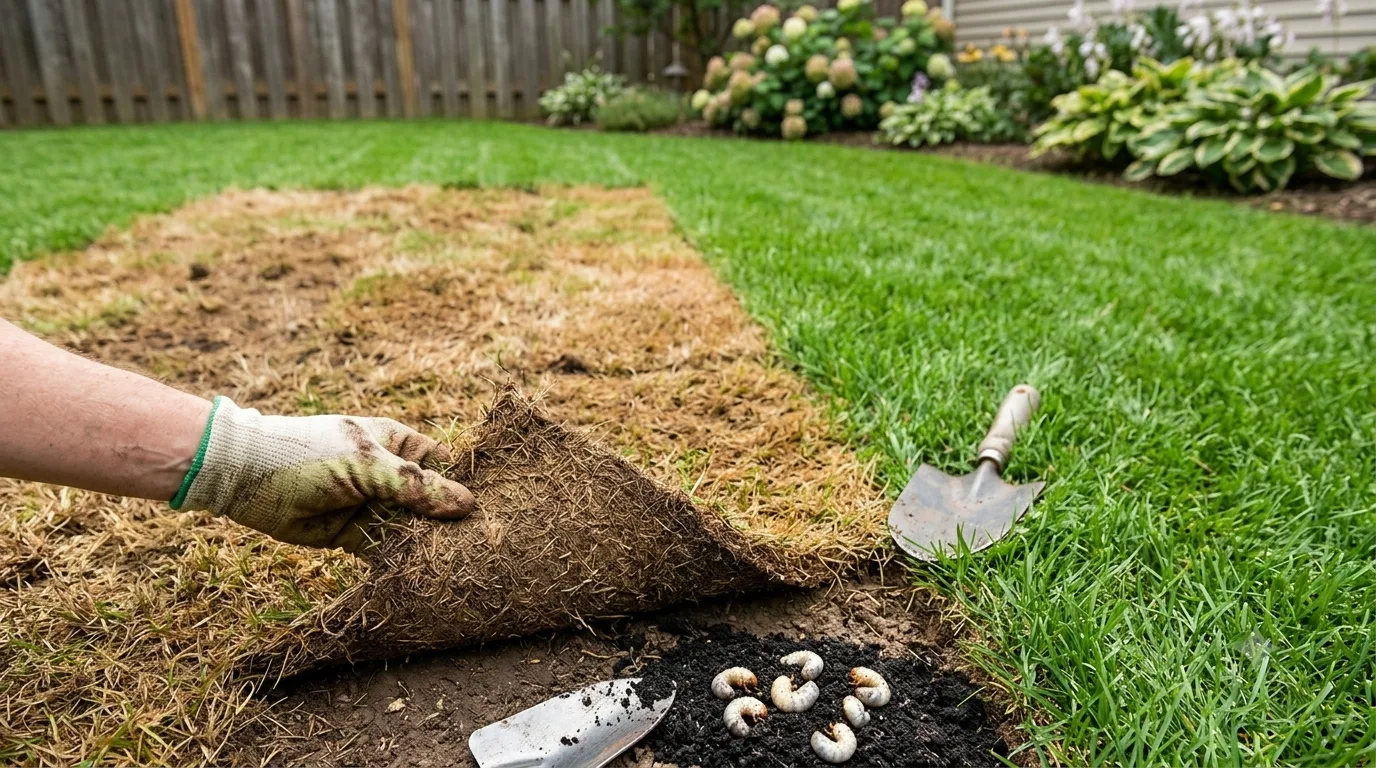
Irregular patches where the turf peels back like loose carpet mean grubs. This is the single most useful test in lawn diagnosis, and it costs nothing: grab the edge of the dead turf and pull — diagnosing a brown spot by the pull test takes thirty seconds.
Healthy grass, even stressed healthy grass, is anchored. Grub-eaten grass lifts in a sheet because the roots are gone, the grubs ate them. Peel a section back and count.
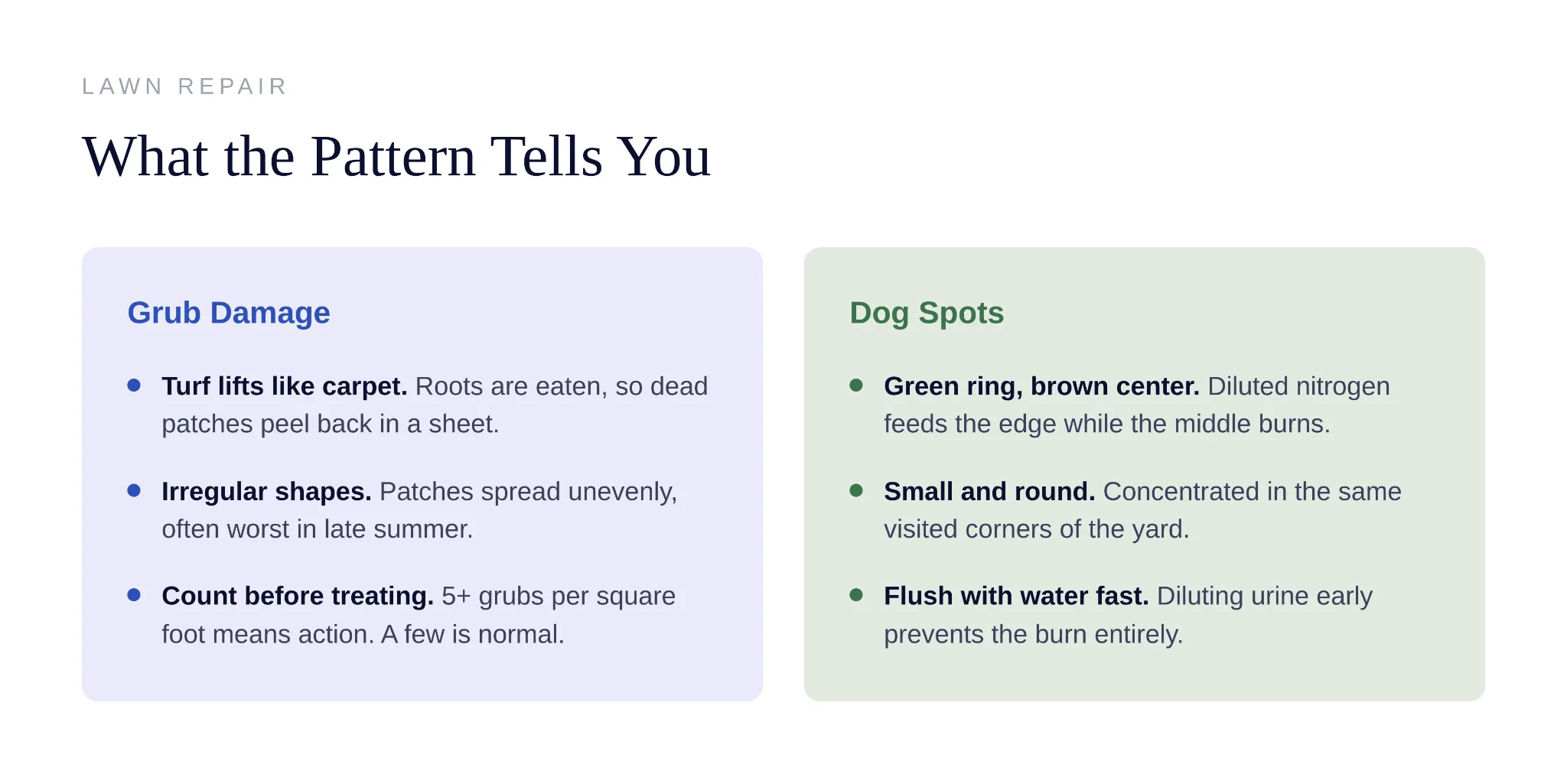
If you find more than five or six white C-shaped grubs in a square foot, you’ve found your killer, and no amount of seed survives until they’re dealt with. A handful of grubs is normal and not worth treating. Every lawn has some.
Circular patches with a smoky or grayish edge point to fungus, with brown patch in tall fescue during muggy summer nights, dollar spot leaving silver-dollar-sized bleached circles, snow mold appearing as matted gray patches when the snow melts.
Fungal spots often have blades that look water-soaked or have lesions on them, and they tend to spread while you watch over a week or two. Dead-from-other-causes spots don’t grow.
A dead strip or splash-shaped patch near where you park equipment is chemical. Gasoline, concentrated fertilizer, herbicide drift, even a pile of ice-melt salt shoveled off the driveway in February. The grass dies fast and completely, edges sharp. If you refueled the mower on the lawn once this summer, you already know which spot this is.
Thin, struggling grass under a tree that finally gave up isn’t a mystery — if the tree is also seeding the lawn, getting rid of tree saplings in the lawn comes first — and it isn’t fixable with more of the same seed. That’s a light problem. Sun-loving seed will die there again, on schedule.
And sometimes the answer is under the surface: a buried chunk of construction debris, a rock, an old stump. Grass over shallow obstructions dries out first and dies first, in the same spot, every single summer. If a spot recurs annually in the same footprint regardless of weather, get a trowel and dig.
Fix the Cause, Then Wait a Beat
This is the step people skip, and it’s the reason repairs fail.
Dog spots: the fix is water, in volume, as soon as possible after the deed. Flushing dilutes the nitrogen before it burns. For established spots, soak the area heavily before repair to push remaining salts down out of the root zone. Long term, either train the dog to one mulched corner or accept that this is a maintenance relationship, not a one-time repair.
Grubs: treat first, seed after. Timing matters more than product. Curative treatments work on small, actively feeding grubs in late summer and early fall. By the time you see damage in spring, the grubs are large, deep, and nearly done feeding, spring treatment mostly wastes money. Also fix what attracted them: grubs thrive in lawns that get frequent shallow watering, because the moist surface layer is perfect for eggs.
Fungus: correct the conditions before reaching for fungicide. Most lawn fungus is a watering-schedule problem wearing a disease costume. Water deeply, early in the morning, two or three times a week, never in the evening, because grass that goes into the night wet is grass that feeds fungus for eight uninterrupted hours.Mow with a sharp blade. Ragged cuts are infection sites.
Chemical spills: the soil itself is the problem now. Dig out the top few inches of contaminated soil and replace it. Seeding into gasoline-soaked dirt gets you gasoline-soaked seedlings.
Shade: change the seed, not the strategy. Fine fescues tolerate shade better than almost anything else. If the spot gets under four hours of light, stop fighting and mulch it or plant a shade groundcover. Grass has a floor, and no cultivar goes below it.
The Repair Itself
Once the cause is handled, the actual reseed is the easy part, and it’s short.
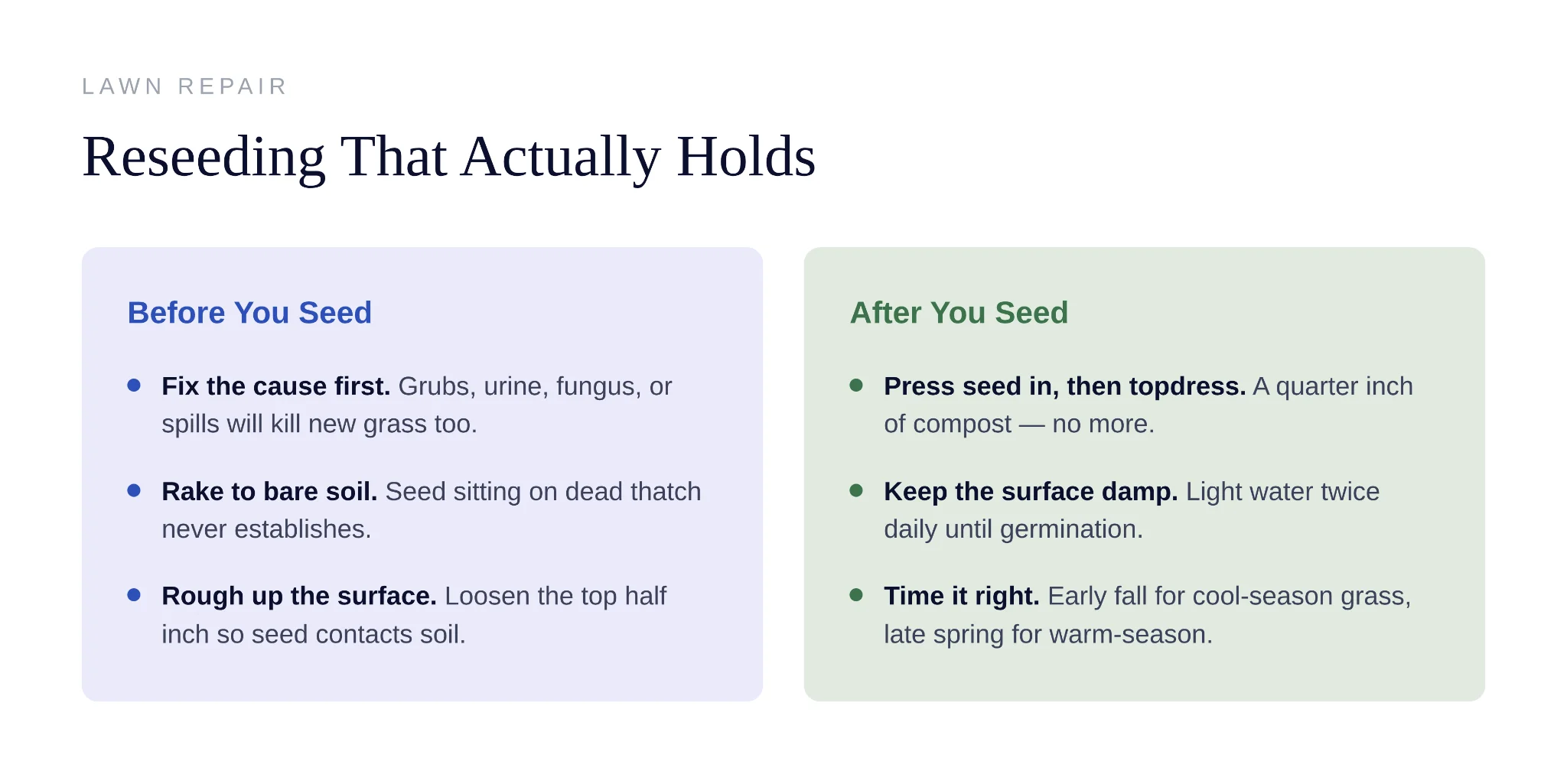
Rake out all the dead material down to soil.
Dead thatch on top of the spot is a physical barrier. Seed sitting on it never touches dirt and never establishes. Then rough up the top half inch of soil with a rake or cultivator. Seed needs contact with loosened soil, not a smooth crust.
Spread seed at the rate on the bag, no heavier. Crowded seedlings compete and stay weak. Press it in and then cover with a quarter inch of compost or screened topsoil (choosing between compost and topsoil for lawn repairs). Not more. Buried seed suffocates. Once the new grass fills in, cleaning up the surrounding border with our step-by-step guide to edging a lawn properly keeps the repaired patch from looking visually distinct from the rest of the yard.
Timing is worth planning around rather than fighting:
Cool-season grasses (fescue, ryegrass, bluegrass) establish best in early fall — warm soil, cooling air, fewer weeds. Spring works but you’ll fight crabgrass for the territory.
Warm-season grasses want late spring, once soil has genuinely warmed. A mid-summer reseed of either type is mostly a donation to the birds.
Then water. Lightly, and often. The surface needs to stay damp until germination, which can mean a quick pass twice a day in warm weather. This is the phase where most repairs die: three days of neglect during germination and the seed desiccates, invisibly, and you spend the next month watering dirt and wondering.
When the Same Spot Dies Again
It happens. And it’s information, not failure.
A repeat death in the same footprint means the diagnosis was wrong or incomplete. Go back to the pattern.
Check for the buried debris, do the tug test on the surrounding turf, look at what that specific spot experiences that the rest of the lawn doesn’t: the downspout that blasts it, the afternoon reflection off a west-facing window, the shortcut the kids take to the gate.
It’s worth noticing how many of the killers in this article trace back to watering done on autopilot. If the dry patch lines up with one irrigation zone, checking whether a sprinkler zone is underperforming will usually surface the cause faster than digging.
Shallow, frequent cycles keep the surface moist and invite grubs to lay eggs.
The Aiper IrriSense 2 maps up to 10 independent zones across 4,800 square feet, so a recovering patch can get its light, frequent germination watering while the rest of the lawn stays on a deep, infrequent schedule, and Weather-Sense adjusts around rain and heat automatically.
Bare, thin patches are sometimes a symptom of compacted soil, which is one reason lawn aeration vs dethatching is worth reading before reseeding.
Get more pool and lawn care guides from Aiper on Google