How to Raise Alkalinity in a Pool Using Baking Soda

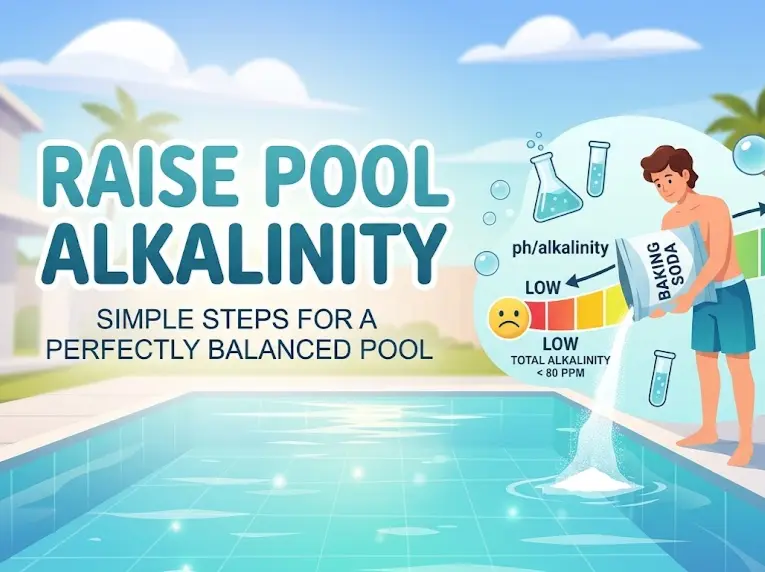
Most pool owners discover low alkalinity by accident. Someone gets out of the pool, rubbing their eyes, and you start running through the chemistry in your head.
It’s almost always alkalinity.
The fix is baking soda. Sodium bicarbonate, specifically, same compound in the kitchen box and the bag at the pool store. If you’re choosing between powders, soda ash vs baking soda for pools explains which one raises which number.
The pool store sells it cheaper by the pound and in bigger quantities, which matters more than people think, because the doses involved are larger than they look.
The Dose Is Bigger Than You Think
A 20,000-gallon pool reading 50 ppm needs around 9 lbs to come back into range.
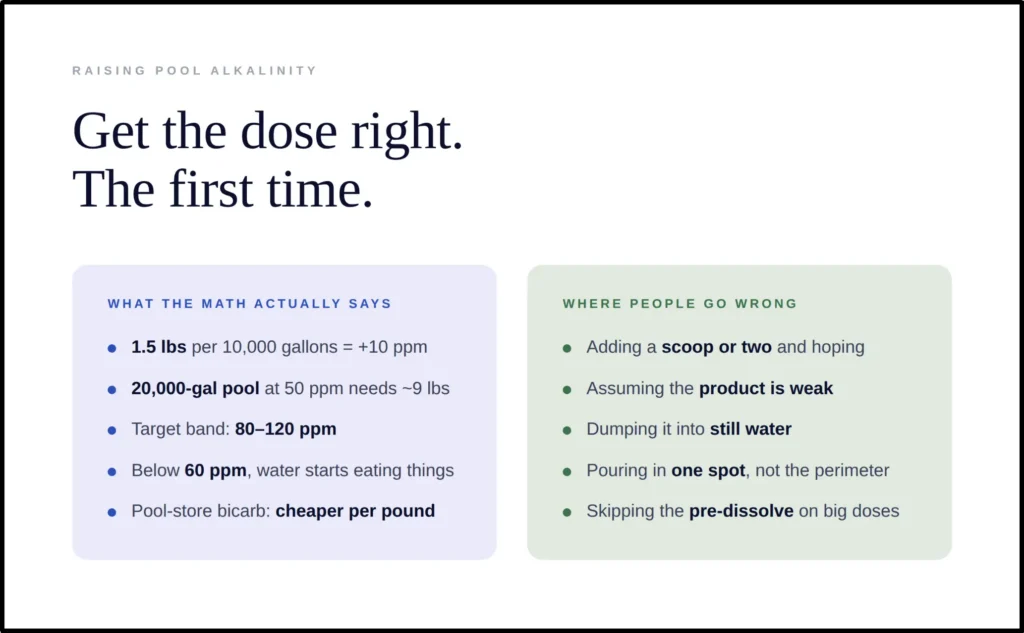
This is where most people get it wrong on the first try: they add what feels like a lot, test the next day, see almost no movement, and assume the product is weak. The product is fine. The dose was a quarter of what the water needed.
To avoid guessing, you can use a pool alkalinity calculator to find the precise amount of baking soda your specific pool size requires.
The rule of thumb: 1.5 lbs of baking soda per 10,000 gallons raises alkalinity by about 10 ppm.
What You’re Aiming For
The target band is 80 to 120 ppm total alkalinity. Inside that, pH stays where you put it.
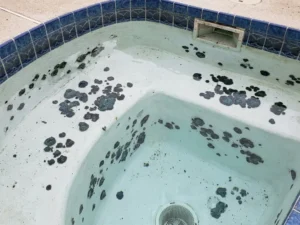
Drop below 60, and the water starts eating things like plaster, grout, metal fittings, and the inside of the heater. Damage that looks like age usually isn’t.
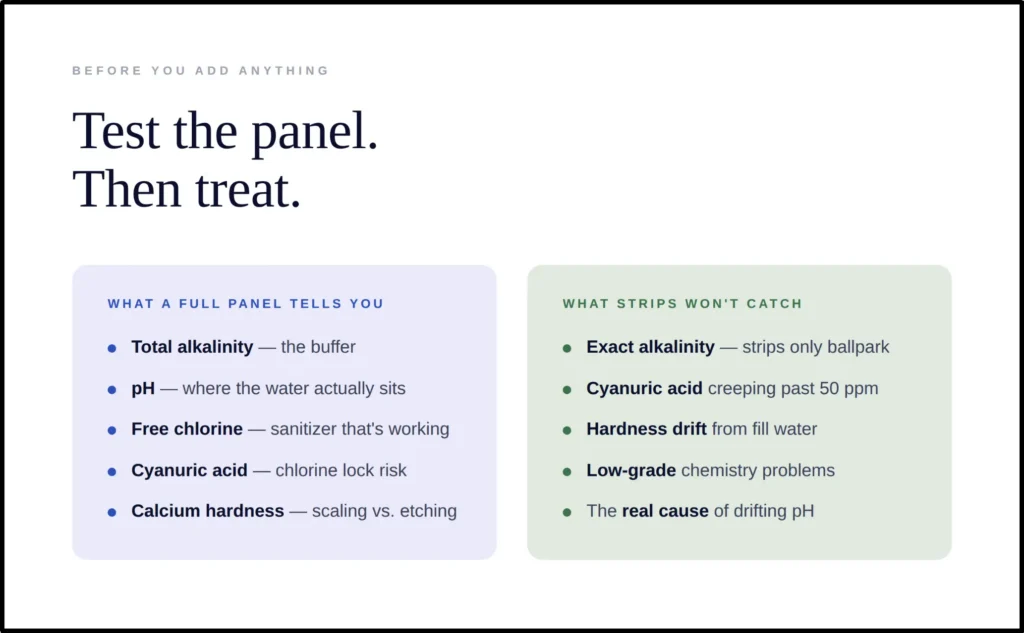
Test first with a drop kit or a digital meter. Strips are good for noticing there’s a problem and bad for telling you what to do about it.
How to Actually Add It
Keep the pump running. Adding bicarb to still water gives you a chalk slick on the floor and a cloudy pool for two days.
Pour slowly, walking the perimeter, working toward the deep end. For anything above 5 lbs, pre-dissolve in a bucket of pool water and pour the slurry in instead, this results in much less haze, much faster recovery.
Split the Dose
If the math says 12 lbs, add 6 today and 6 tomorrow.
Overshooting forces you into the harder problem, like lowering alkalinity means muriatic acid, plus aeration, plus a few days you didn’t plan to spend. Easier to creep up than walk back.
Let the pump run six to eight hours before retesting. Sooner, and you’re sampling a pocket of treated water, not the pool.
What Happens to pH
pH will climb a little. That’s the trade. Bicarb is mildly basic, so part of every dose pushes pH up alongside alkalinity. If pH was running low to begin with, this saves you a step. If it was already high, leave it alone until alkalinity stabilizes, then bring pH down with acid, knowing that the acid will pull a little alkalinity back down with it.
The Loop That Wrecks Pools
pH reads high, owner panics, adds acid, watches alkalinity tank, adds bicarb, sees pH spike again, adds more acid. A week of work to end up worse than the start.
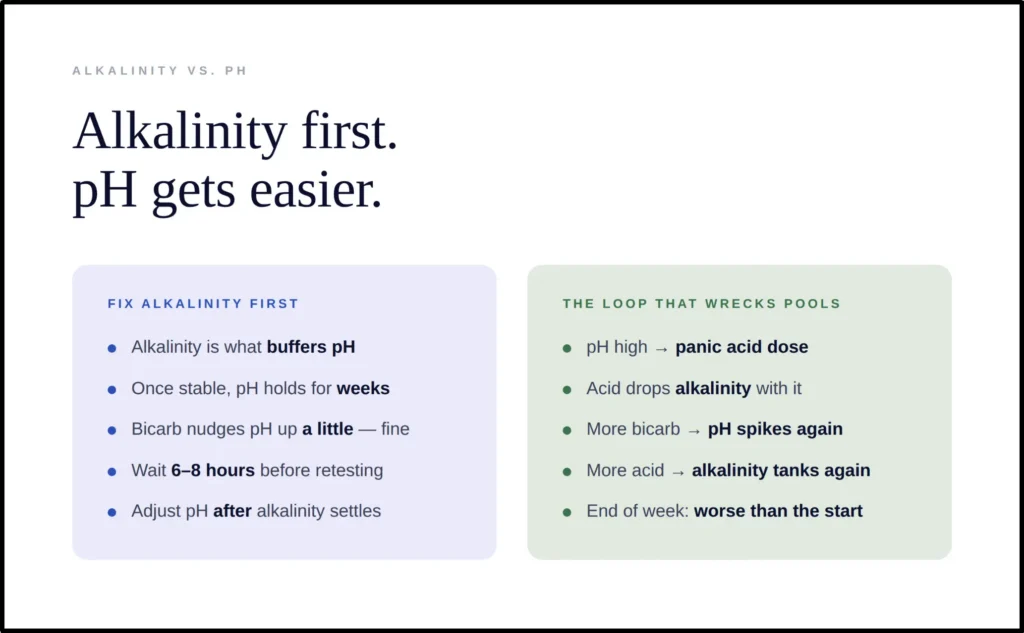
Alkalinity first, then pH. The order is the whole thing.
A pool with proper alkalinity holds pH for weeks. One without it drifts no matter what you pour in.
When Baking Soda Isn’t the Answer
If alkalinity is okay and the water still feels off, the problem is somewhere else. Maybe cyanuric acid is creeping up and locking the chlorine. Calcium hardness drifting. Or top-off water from a hose is carrying its own chemistry into the pool every week.
Bicarb does one thing. It raises alkalinity. It is not a fix for cloudy water, tired water, or water that just looks wrong. Reach for it when the test says alkalinity is low and not otherwise — that’s also the role baking soda plays in the the BBB pool method alongside bleach and borax.
Test the Whole Panel
A full panel, where you test alkalinity, pH, free chlorine, cyanuric acid, and calcium hardness, takes twenty minutes and saves the weekend you’d otherwise spend chasing whichever number you happened to test first.
Once that panel reads clean and the pump is doing its work, most of the pool maintenance becomes mechanical, with surface debris, floor coverage, and the fine particulate that the filter can’t grab on its own.
Aiper’s robotic cleaners handle that side of it, which leaves chemistry as the only thing actually asking for your attention.
FAQs
Yes, absolutely. Baking soda is sodium bicarbonate, which is the exact same chemical compound sold in pool stores as “Alkalinity Increaser” or “Alkalinity Up.” It is a safe, effective, and often cheaper way to raise your pool’s total alkalinity.
The rule of thumb is to add 1.5 lbs of baking soda per 10,000 gallons of pool water to raise the total alkalinity by approximately 10 ppm.
Example: If you have a 20,000-gallon pool and your alkalinity reads 50 ppm, you need to raise it by 40 ppm to reach the ideal range. This will require around 9 lbs of baking soda.
You should aim for a target band of 80 to 120 ppm total alkalinity. Inside this range, your pH level will stay stable. If alkalinity drops below 60 ppm, the water becomes corrosive and can damage pool plaster, grout, metal fittings, and the inside of your pool heater.
Follow these steps for the best results:
1. Keep the pump running: Never add baking soda to still water, or it will create a chalky slick on the pool floor.
2. Pour slowly: Walk around the perimeter of the pool, working your way toward the deep end.
3. Pre-dissolve for large doses: If you are adding more than 5 lbs, pre-dissolve the baking soda in a bucket of pool water first and pour the slurry in. This reduces water haze and allows for faster recovery.
Yes. If your math shows you need a large amount (e.g., 12 lbs), it is best to split the dose: add 6 lbs today and 6 lbs tomorrow. Overshooting your target forces you into a much harder problem, as lowering alkalinity requires muriatic acid, heavy aeration, and days of extra work. It is much easier to creep up than to walk back.
Let the pool pump run for 6 to 8 hours before retesting. If you test too soon, you will likely sample an unmixed pocket of treated water rather than getting an accurate reading of the entire pool.
Yes. Baking soda is mildly basic, so every dose will push your pH up slightly alongside the alkalinity.
1. If your pH was already low, this saves you a step.
2. If your pH was already high, leave it alone until your alkalinity stabilizes, then use muriatic acid to bring the pH back down.
Always raise alkalinity first. Properly balanced alkalinity acts as a buffer and holds your pH in place for weeks. If you try to adjust pH while your alkalinity is tanked, you will get trapped in a “wreck loop” where your pH constantly drifts and spikes, wasting time and chemicals.
Get more pool and lawn care guides from Aiper on Google